Disposing hazardous items in North End: legal rules
Posted on 29/07/2026
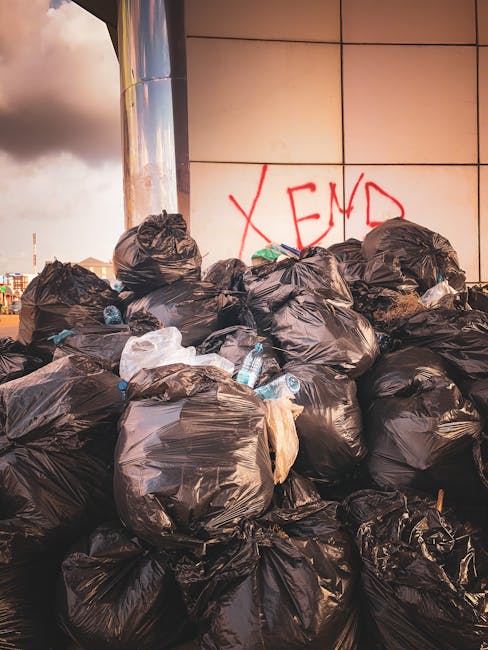
If you are clearing a flat, emptying a garage, or just finally tackling that cupboard of forgotten chemicals, Disposing hazardous items in North End: legal rules can feel oddly confusing. Some things look harmless until you realise they need careful handling, separate transport, or a proper collection route. Others are the kind of items you do not want sitting around another week, let alone ending up in the wrong bin.
This guide explains the legal rules in plain English, with practical steps for North End households, landlords, students, and small businesses. You will see what counts as hazardous waste, why the rules matter, how to stay on the right side of them, and what to do when you are not sure. Truth be told, most problems start with small assumptions: "It's just an old tin of paint," or "the batteries can go with the rubbish." That is where avoidable risk creeps in.
By the end, you will know how to sort items properly, what to keep away from general waste, and how to make a sensible plan that protects you, your property, and the wider North End area.
Why Disposing hazardous items in North End: legal rules Matters
Hazardous items are not just a "messy clear-out" problem. They can harm people, damage vehicles, contaminate other waste, and create legal issues if they are handled carelessly. In a busy residential area like North End, where homes, flats, stairwells, loading spaces, and shared bin stores can all be tight on room, a small disposal mistake can quickly become a big nuisance.
The legal side matters because hazardous waste is treated differently from ordinary household rubbish. Items such as solvents, paint thinners, bleach, oil, fluorescent tubes, batteries, aerosols, pesticides, gas canisters, and some electronic equipment may need specific segregation or a specialist collection route. If they leak, react, or ignite, the risk is obvious. If they are mixed with general waste, the issue is less visible but still serious.
There is also a simple public-interest point here. North End streets, loading bays, and communal bins are shared spaces. One badly bagged chemical container can affect everyone in the building. One damaged battery can create smoke or fire risk in a refuse vehicle. So the rules are not just red tape. They are there to stop avoidable harm.
Expert summary: if an item can burn, corrode, poison, explode, or contaminate other waste, treat it as hazardous until you have checked its disposal route.
That approach is cautious, but it is usually the right one.
How Disposing hazardous items in North End: legal rules Works
The basic process is straightforward once you break it down. First, identify what you have. Then separate hazardous items from general waste, keep them in their original containers where possible, and check whether they need a special collection, a recycling route, or a drop-off arrangement. The legal requirement is not usually about perfection; it is about reasonable care, proper segregation, and avoiding unlawful disposal.
For households, the practical rules usually mean you should not put hazardous items into normal household bins unless the item is specifically allowed there. For businesses, the duties are stricter. You may need to classify waste correctly, store it safely, and pass it to an authorised carrier or facility. Even a small office can generate batteries, toner cartridges, cleaning products, and old IT equipment that should not be treated casually.
In day-to-day terms, the process often looks like this:
- Identify the item and read any warning symbols or labels.
- Keep incompatible items apart, such as acids and bleaches.
- Do not pour liquids down drains unless you are certain it is allowed and safe.
- Store items upright and sealed to prevent leaks.
- Arrange the right collection or disposal route.
- Keep a note of what was removed, especially for business waste.
That is the practical flow. Nothing glamorous, admittedly, but it works.
If you are already in the middle of a move or a serious declutter, it can help to combine this with broader planning. A clear-out guide like a step-by-step declutter before relocating can make the sorting stage much easier, especially when hazardous items are mixed in with general rubbish.
Key Benefits and Practical Advantages
Following the legal rules is not only about avoiding trouble. There are some very practical benefits, especially if you are clearing out a home before moving, handling a rental turnover, or sorting a business storage room that has turned into a mini chemistry set by accident.
- Less risk of accidents: separated hazardous items are less likely to leak, ignite, or react with other waste.
- Cleaner handover: if you are moving out, a well-managed disposal process makes the property safer and easier to leave in good condition.
- Fewer collection problems: correct sorting reduces the chance of a bin refusal or an awkward last-minute mess.
- Better compliance: you are less likely to breach waste handling duties or local rules.
- More efficient removals: planning hazardous items separately helps the main clearance go smoothly.
There is another quiet benefit people often overlook: peace of mind. Once the toxic stuff, sharp stuff, flammable stuff, and leak-prone stuff are isolated, the rest of the job suddenly feels lighter. You can see the floor again. The room smells less chemical. The stress eases off a bit.
If you are coordinating a larger clear-out, the planning advice in ensuring a calm and untroubled house move can help keep the whole process organised, especially when the disposal stage is only one part of a busy move day.
Who This Is For and When It Makes Sense
This topic matters to a lot of people, not just those clearing out a workshop or garage. In North End, the most common situations are very ordinary ones: a flat end-of-tenancy clean, a student move, an inherited property, or a home office that has accumulated old tech and cleaning products over the years.
You probably need this guidance if you are:
- moving house and want to reduce what you take with you
- clearing a rental property and need to leave it safe
- emptying a loft, shed, or cellar
- disposing of old paints, solvents, or garden chemicals
- handling batteries, fluorescent bulbs, or broken electronics
- preparing an office or shop for refurbishment
- trying to sort waste after a DIY project
It also makes sense if you are simply unsure. That is honest, and it is better than guessing. A lot of hazardous waste is not obviously hazardous at first glance. A half-empty aerosol can? A dried-out paint tin? A broken thermometer from a medicine cabinet? These are exactly the kinds of things people underestimate.
And yes, if you have a big move coming up, it may be worth thinking about storage or staged removal so dangerous items are not shuffled around repeatedly. A practical piece like effective strategies for storing your dormant freezer is not about hazardous waste specifically, but it does show how planning storage properly can prevent headaches later.
Step-by-Step Guidance
Here is a sensible way to deal with hazardous items without turning the process into a weekend disaster.
1. Make one dedicated sorting area
Choose a space with good light, ventilation, and a hard floor if possible. Keep pets and children away. If something leaks, you want to know about it immediately, not three hours later when a box has tipped over in the hallway. A kitchen table is not ideal if you can avoid it.
2. Identify the item type
Group items into categories such as paints, solvents, batteries, bulbs, aerosols, oils, gas containers, medicines, sharps, and electronic waste. Check labels carefully. If a container has no label, do not assume it is harmless. Some of the most awkward items are the ones that have been decanted into unmarked tubs.
3. Keep incompatible materials apart
This is a big one. Bleach should not be stored near acids. Flammable liquids should not be left near heat sources. Damaged batteries should not be stacked in a loose pile. If you are unsure whether two materials can coexist safely, separate them. Simple rule. Better safe than sorry.
4. Seal and contain everything properly
Use original lids where possible. Put small items into a rigid container, not just a thin bag. For leaking containers, use absorbent material and place them in a secondary sealed container. If a bottle is cracked, do not keep handling it repeatedly. Set it down somewhere safe and move slowly.
5. Decide the right disposal route
Some items may be accepted through specific household collection arrangements or at suitable facilities; others may need a specialist carrier. For business waste, the route is usually more formal. If the item has a hazard symbol, assume it needs extra care until proven otherwise.
6. Transport carefully
Keep hazardous items upright, secured, and away from food, clothing, or soft furnishings. Never leave them rattling loose in the back of a vehicle. If you are doing a local run across North End, do it once, do it neatly, and avoid casual stacking. Nobody enjoys the smell of spilled paint on a warm afternoon. Nobody.
7. Confirm completion
Once items are handed over or removed, note what went where. This matters especially for landlords, small businesses, and anyone who wants a clear record of what was done.
Expert Tips for Better Results
After enough clear-outs, the same patterns keep appearing. The people who have fewer problems are usually the ones who slow down for ten minutes at the start. That tiny pause saves a lot later.
- Keep originals whenever possible: original containers usually give you the best information about contents and risk.
- Photograph unfamiliar items: a quick photo can help you check labels or get advice later without rummaging again.
- Do not mix "old" with "empty": an empty-looking tin may still have residue. Treat it as contaminated unless you know otherwise.
- Use a hard bin or crate for transport: soft bags tear too easily.
- Schedule hazardous items first: do them before the general sort starts to get chaotic.
- Keep a simple inventory: even a handwritten list on scrap paper is better than nothing.
One practical trick: if you are moving furniture at the same time, keep hazardous items out of the main removal flow entirely. That way no one accidentally loads them with beds, tables, or boxes. If you are arranging a wider clearance, the planning tips in bulky waste in North End, sofa and fridge disposal tips can be useful for separating large non-hazardous items from the more sensitive ones.
Also, do not forget the boring bits. Tape a box shut properly. Label it clearly. Mark "fragile" where needed. A one-minute label can save a very long phone call later. It really can.
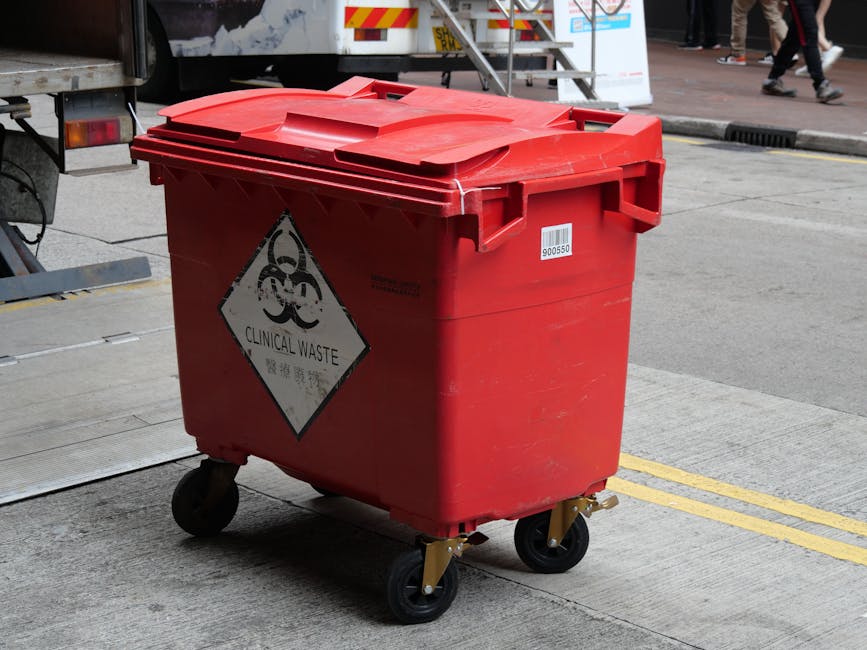
Common Mistakes to Avoid
This is where most avoidable issues show up. The mistakes are common because they seem convenient in the moment.
- Putting hazardous waste in general rubbish: this is the simplest way to create risk and possible non-compliance.
- Leaving items unlabelled: if no one knows what it is, no one can safely decide what to do with it.
- Pouring liquids into drains: this can create pollution, blockages, or dangerous reactions.
- Breaking down containers without caution: crushed cans, cracked bottles, and damaged batteries need extra care.
- Storing chemicals next to heat or direct sun: garages and sheds get warmer than people think.
- Assuming batteries are harmless: they are small, yes, but they are not trivial.
- Mixing cleaning products: one of the easiest ways to create fumes or worse.
A slightly awkward truth: people often treat hazardous items as a "later problem" during a house move. Then the last day arrives, boxes are stacked everywhere, and someone spots a half-empty tin of solvent. At that point the job feels twice as big. If this sounds familiar, you are not alone. It happens all the time.
Tools, Resources and Recommendations
You do not need a laboratory. A few basic items make the process much safer and much less stressful.
- Heavy-duty gloves: for handling dirty or sharp containers.
- Clear plastic tubs or rigid boxes: better than flimsy bags for leaks and breakages.
- Marker pens and labels: for writing contents and cautions clearly.
- Absorbent material: useful for minor leaks while items are contained.
- Bin liners for non-hazardous spillovers: keep them separate from the actual hazardous item.
- Tape and sealable lids: simple, effective, often overlooked.
For the broader move or clearance, having the right packing support helps a lot. If you are working through a whole property, packing and boxes North End can be a sensible place to look at how to organise your non-hazardous items so the hazardous bits stay isolated and easy to track.
If the job involves heavy lifting alongside disposal, it is also worth keeping safety in mind. solo heavy lifting made easy with expert tips is useful reading when you are trying not to overdo it while carrying awkward containers or moving boxes around a cluttered space.
For unusually awkward objects, like a large upright item that is not quite waste, not quite furniture, but definitely not pleasant to handle, you may need a more structured move. That is where a service such as furniture removals North End can help with the physical logistics, while you keep hazardous waste separate and compliant.
Law, Compliance, Standards, or Best Practice
In the UK, hazardous waste handling is governed by waste law, environmental controls, and duty-of-care expectations. The exact rule set depends on whether you are a householder, landlord, tenant, tradesperson, or business. So it is wise to be cautious rather than overly certain. The broad principle is consistent: waste must be stored, moved, and passed on safely, and not mixed or dumped in ways that create risk.
For households, the main concern is not to put hazardous items into ordinary domestic bins unless the local system clearly allows it. For businesses, the legal obligations are tighter. You are generally expected to identify waste correctly, keep it secure, and use an appropriate authorised route. If you employ contractors, you should also be confident they are handling the waste correctly and lawfully.
Best practice usually includes:
- separating hazardous items from general rubbish at the point of sorting
- keeping items in secure containers with readable labels
- avoiding mixing different chemical types
- storing waste away from heat and ignition sources
- using authorised disposal routes rather than informal dumping
- keeping a record where business rules apply
One useful way to think about it is this: if you would feel uneasy handing the item to a stranger in the street, it probably needs a proper disposal route. Not a technical test, granted, but a decent gut check.
For those also moving premises, it can help to understand loading and access responsibilities too. A local planning piece like do you need a North End council permit for loading can be handy when disposal and moving happen on the same day.
Options, Methods, or Comparison Table
Different hazardous items call for different approaches. Below is a simple comparison to help you choose the right route without overcomplicating it.
| Item type | Typical risk | Best approach | Notes |
|---|---|---|---|
| Batteries | Fire, leakage, short-circuiting | Keep separate, seal terminals if needed, use a dedicated route | Never toss loose into general waste |
| Paint and solvents | Flammability, fumes, contamination | Keep sealed and upright, arrange a proper collection or disposal route | Do not mix different chemicals |
| Aerosols | Explosion, puncture hazard | Store carefully and dispose as instructed for the product type | Do not heat or crush |
| Fluorescent tubes and bulbs | Breakage, mercury exposure in some types | Package to prevent breakage and use a suitable disposal route | Handle gently, even if already dead |
| Cleaning chemicals | Corrosive reactions, fumes | Keep original labels and separate incompatible products | Particularly important in shared homes |
| Old electronics | Battery, wiring, and component hazards | Use the proper recycling or disposal stream | Check for hidden batteries in devices |
If you are deciding between doing it yourself and bringing in help, think about three things: volume, risk, and timing. A couple of sealed paint tins are one thing. A whole shed full of mixed products is another. And if you are racing a moving deadline, the simplest option is often the safest one.
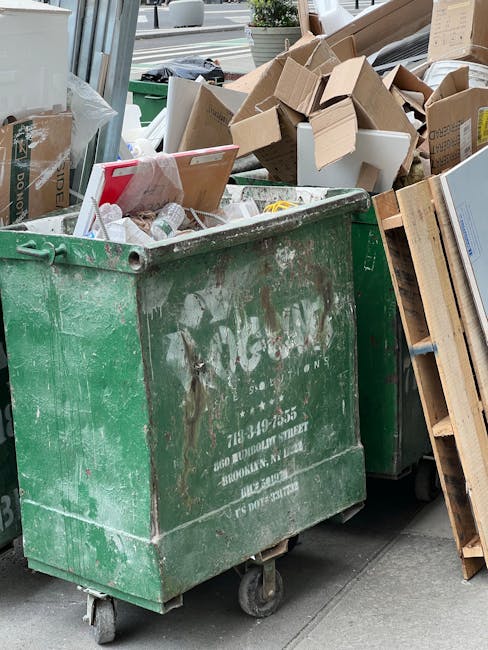
Case Study or Real-World Example
A North End flat clear-out can look ordinary right up until the cupboards are opened. One recent-style scenario goes like this: a tenant is moving out on a Friday, there is a battered box of old cleaning products under the sink, a few loose batteries in a drawer, some aerosol deodorants, and a cracked tin of paint from a previous DIY job. Nothing dramatic. But all of it needs different handling.
Instead of tossing everything into one black bag, the items are sorted into categories. The batteries go into a small rigid tub. The aerosols are kept separate. The paint tin is checked, sealed, and isolated. The cleaning products are not mixed. The tenant then arranges the correct disposal route before the final move-out day, rather than trying to deal with it while keys are already due back.
The result is simple: no leakage in the hallway, no panic on moving morning, and no awkward last-minute scramble. Also, the cleaner can actually clean the kitchen properly without dodging mystery bottles. That alone feels like a win.
In a larger example, a small office near North End might find old toner cartridges, spare batteries, and a few unused maintenance products in a storage cupboard. If the team treats everything as ordinary rubbish, the risk is not just compliance; it is also a messy handover and avoidable fire risk. Sorting early makes the final clearance a lot smoother. Not perfect, just smoother. And sometimes that is the difference between chaos and a controlled job.
Practical Checklist
Use this as a quick last look before you dispose of anything.
- Have I identified every item that may be hazardous?
- Are the items separated from general household waste?
- Are containers sealed and, where possible, still labelled?
- Have I kept incompatible products apart?
- Have I checked for leaks, cracks, or damaged packaging?
- Do I know the correct disposal route for each category?
- Have I stored items away from heat, flames, or direct sunlight?
- Have I kept children and pets away from the sorting area?
- Do I need a record of disposal for business or landlord purposes?
- Have I arranged transport so items stay upright and secure?
Practical reminder: if something feels uncertain, stop and isolate it. Do not keep "just shifting it about" in the hope it will become less risky. It never really does.
Conclusion
Disposing hazardous items in North End is mostly about calm, careful sorting and respecting the difference between ordinary waste and potentially dangerous material. The legal rules exist because these items can leak, react, ignite, or contaminate other rubbish, and the consequences can spread well beyond one household.
If you take one thing from this guide, let it be this: separate first, identify second, dispose properly third. That order reduces risk and makes the whole job feel less overwhelming. Whether you are clearing a flat, preparing a move, or sorting a long-neglected cupboard, a little structure goes a long way.
And if the pile looks a bit daunting, that is normal. Start with one shelf, one box, one corner. Once you do, the rest tends to follow. Quietly, steadily, and without drama. Which, honestly, is usually the best kind of progress.
Get a free quote today and see how much you can save.


