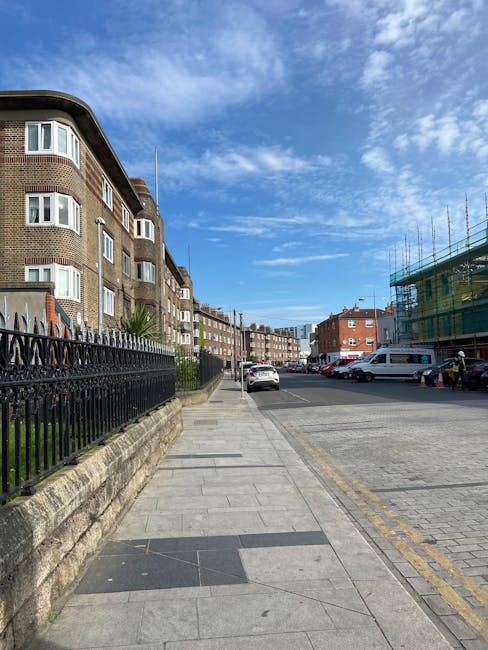
North End Seafront flats: access guide for removals
Posted on 02/06/2026
Moving into or out of a seafront flat sounds simple enough on paper. Then the reality kicks in: tight access, awkward parking, lift bookings, shared entrances, sandy stairs, and the vague feeling that everything is just a little harder than it should be. If you are planning removals in North End's seafront flats, a good access plan is not a nice extra. It is the thing that keeps the day calm, fast, and far less stressful.
This guide breaks down North End Seafront flats: access guide for removals in plain English. You will see what matters most, how to prepare, which problems usually slow things down, and how to make the move easier for everyone involved. We will also cover practical checklists, a comparison of access options, and the small details that often get missed until the van is already outside. Truth be told, those little details are usually the ones that decide whether a move feels smooth or chaotic.
If you want a broader view of the moving process while planning this one, you may also find our guide to North End road moves and the essential local checklist useful alongside this article.

Why North End Seafront flats: access guide for removals Matters
Seafront flats often look convenient from the outside. You are near the road, close to amenities, and probably within walking distance of the places you actually use every day. But removals are a different story. A route that feels fine for a person with a backpack can be awkward for a crew carrying a wardrobe, mattress, or stack of boxes through a shared hallway.
Access matters because it directly affects time, safety, and cost. If the removal team can park close to the entrance, use a lift, and move items without repeated turns or long carries, the job is usually simpler. If they cannot, even a modest flat move can become a bit of a shuffle. Not disaster territory, but enough to make everyone tired.
In seafront buildings, you also get a few extra quirks. Wind can make doors harder to manage. Salt and damp can affect surfaces. Visitor parking may be limited. And if the building is in a busier stretch near the promenade, traffic timing becomes part of the plan too. None of this is unusual, but it does need thinking through before moving day rather than on the morning itself.
For flat moves generally, our flat removals in North End page is a helpful starting point if you want the service side alongside the access planning side. If your move needs more flexible loading and unloading support, the man and van North End option may also be worth a look.
How North End Seafront flats: access guide for removals Works
Access planning is really just a way of turning a flat move into a series of manageable steps. Instead of assuming the van will park somewhere nearby and everything will fall into place, you check the route from van to front door, then from front door to flat, and then from flat to van at the other end.
That sounds basic, but it is the bit people skip most often.
A proper access guide usually looks at six things:
- Parking proximity - how close the van can get to the entrance.
- Building entry - gates, key fobs, codes, buzzers, or concierge points.
- Vertical access - lifts, stairs, split-level landings, or narrow stairwells.
- Load-bearing route - whether furniture can turn corners without damage.
- Timing controls - booking windows, quiet hours, or neighbour considerations.
- Object size and fragility - especially for sofas, beds, mirrors, and pianos.
In practice, a mover or customer will usually share building details, photos, and any restrictions in advance. A good removals team can then decide whether a standard van, a smaller vehicle, additional people, or a different arrival time makes more sense. That is what makes access planning useful: it turns guesswork into a plan.
Small example. If the flat is on the second floor and the lift is too small for a king-size mattress, the team can prepare for a stair carry rather than finding out at the last second. No drama. Just better pacing and better protection for the item, the walls, and the backs of the people carrying it.
Key Benefits and Practical Advantages
Good access planning gives you more than convenience. It reduces friction at every stage of the move.
- Less waiting around - no one is standing in the hallway trying to work out where the van can stop.
- Lower risk of damage - fewer awkward turns, fewer rushed lifts, less scraping against paintwork.
- Safer handling - better route planning means fewer sudden stops and less strain.
- Clearer time expectations - once access is known, arrival and completion estimates become more realistic.
- Better neighbour relations - especially in shared buildings where corridors and entrances are used by everyone.
- More accurate quoting - the team can match the job to the right vehicle and crew size.
To be fair, the biggest benefit is often peace of mind. When you know the access route has been checked, the move feels less like a gamble. You can focus on the boxes, the keys, the meter readings, and all the little admin jobs that somehow appear at the last minute.
For support with the actual loading side, see our packing essentials for a successful house move and our practical packing and boxes in North End service information. Access is one side of the coin; packing well is the other.
Who This Is For and When It Makes Sense
This guide is for anyone moving in or out of a North End seafront flat, but it is especially relevant if your building has any of the following:
- shared stairwells
- a small or slow lift
- limited roadside stopping space
- restricted hours for moving
- controlled entry or concierge access
- large furniture that needs careful manoeuvring
- top-floor access with no lift
It also makes sense if you are moving at a busy time of year, on a weekend, or during a window when seafront traffic is unpredictable. That might sound a bit obvious, but in real life the timing can make a bigger difference than people expect. A 20-minute delay caused by parking can ripple through the whole morning.
Students, first-time renters, landlords, and homeowners all benefit from planning access properly. If the job is small, a well-organised van move may be enough. If the property includes awkward furniture or a long carry from the road, you may want a fuller removals North End package or a more tailored removal service in North End.
It is also worth mentioning storage. Sometimes access issues are easiest to solve by moving one part of the load first and storing the rest. If that sounds familiar, take a look at storage in North End for a sensible fallback option.
Step-by-Step Guidance
Here is the practical sequence we would recommend for most seafront flat removals. Keep it simple. You do not need to overcomplicate it.
- Check the building layout. Find out whether there is a lift, how wide the stairs are, and whether any doors are unusually tight.
- Measure your bulky items. Sofas, beds, wardrobes, and appliances are the usual troublemakers. Measure them before moving day, not during it.
- Confirm parking or stopping space. Ask where the van can legally and safely load. If a bay is needed, check how far in advance it must be arranged.
- Speak to the building contact. That might be a landlord, managing agent, concierge, or neighbour who knows the access rules.
- Book the right vehicle. A smaller vehicle may be better if the road is narrow or the entry point is awkward.
- Share special-item details. Mention anything fragile, heavy, or unusually shaped. A piano, for example, should be flagged early. Our piano removals North End page explains why specialist handling matters.
- Prepare the flat itself. Clear hallways, remove trip hazards, and pack loose items so the team has room to work.
- Plan the exit route. Decide where boxes will be staged, which item comes out first, and what should stay back until the end.
A small but important detail: if your flat is near the seafront, think about weather. A breezy day can make doors swing open at exactly the wrong moment. Wet ground can also slow loading. It is not a reason to panic, just a reason to leave a little extra margin in the schedule.
If you are trying to reduce the amount of stuff going out the door in the first place, a good pre-move declutter makes everything easier. This guide to decluttering before relocating is worth reading before you start packing boxes.
Expert Tips for Better Results
In our experience, the smoothest flat removals are rarely the ones with the fanciest planning documents. They are the ones where the basics have been handled well and someone has actually thought about the route from room to van.
- Take photos of problem areas. A narrow hallway or a tight stair bend is easier to explain with a picture than with three paragraphs.
- Label boxes by room and priority. It sounds small, but it cuts down on confusion once the load starts moving.
- Disassemble only where it helps. Not everything needs stripping down. Focus on the pieces that genuinely gain clearance or reduce weight.
- Protect soft furnishings early. Sofa covers, mattress bags, and blankets are worth having ready before the first lift starts.
- Keep a clear landing zone. If the hallway is blocked, the team loses rhythm. Then the move slows down. Simple as that.
- Be realistic about timing. A top-floor flat with no lift is not the same as a ground-floor studio, even if the floor count only differs by a couple of numbers.
For larger furniture, it can help to read more specialist advice before move day. Our articles on transporting a bed and mattress and furniture removals in North End offer practical ideas that work well in tight-access buildings.
And if you are moving solo for part of the process, do not try to outsmart physics. The guide on solo heavy lifting tips is a sensible read, but for anything genuinely heavy, it is usually better to get help. Your shoulders will thank you later, which is nice.
![The image shows a multi-storey brick building with a ground-floor storefront labeled 'Home Style Laundry' featuring large glass windows and a red brick exterior. In front of the shop, there is a small paved sidewalk area with a decorative black lamppost and a black bollard. Parked cars are visible along the street, including a grey vehicle and a red vehicle, indicating a typical urban neighbourhood scene. The street is cornered with a pedestrian crossing visible at the intersection. The building's upper floors have multiple windows, some with white trim, and the background includes other older buildings with various architectural styles, suggesting an area where professional house removals and furniture transport could take place. The lighting is natural daylight, highlighting the urban environment conducive to home relocations with careful loading and unloading of furniture and moving boxes by [COMPANY_NAME].](/pub/blogphoto/north-end-seafront-flats-access-guide-for-removals2.jpg)
Common Mistakes to Avoid
A lot of access problems are avoidable. Not all of them, of course, but enough that it is worth slowing down and checking the obvious things first.
- Assuming the van can park outside. Roads near seafront properties are often busier than they look on a quiet visit.
- Forgetting to ask about lifts. A lift exists, yes, but is it working, bookable, or big enough for furniture?
- Ignoring stair turns and handrails. A stairwell can be technically passable and still awkward for long items.
- Leaving packing too late. If boxes are half-done, the moving team wastes time while you finish sorting things out.
- Not warning anyone about oversized items. The surprise wardrobe is never a good surprise.
- Forgetting building rules. Some blocks are relaxed, some are not. Best not to assume.
- Overloading one person. Even if someone says they can manage it, a second pair of hands is often the safer call.
One of the most common issues, oddly enough, is the small stuff: loose bikes, bins, mats, plant pots, and random hallway clutter. They seem harmless until somebody is carrying a corner sofa past them and has nowhere to turn. Bit of a nuisance, really.
Tools, Resources and Recommendations
You do not need specialist kit for every flat move, but the right tools make a real difference in tight-access settings.
| Tool or resource | Why it helps | Best used for |
|---|---|---|
| Measuring tape | Checks door widths, stair landings, and furniture dimensions | Sofas, beds, wardrobes, appliances |
| Furniture blankets | Protects finishes from bumps and scraping | Wood, gloss, glass, corners |
| Mattress bags | Keeps bedding clean in narrow hallways and lifts | Mattresses and toppers |
| Box labelling system | Makes loading and unloading faster | All general household items |
| Access photos | Helps a removals team judge route difficulty in advance | Buildings with tricky entrances or stairs |
| Service contacts and booking details | Reduces delay when building access needs confirming | Managed flats, concierge buildings, student blocks |
There are also a few helpful supporting pages if you are comparing service options. The services overview page is a good place to see the broader picture, while man with a van North End is useful when you want a flexible, local solution for a smaller move.
If your timing is tight, the same-day removals North End page may also be relevant, though same-day jobs still benefit from clear access information. Fast does not mean vague.
Law, Compliance, Standards, or Best Practice
For most flat removals, the key compliance issue is not legal complexity so much as practical responsibility. You need to respect building rules, parking restrictions, and safety expectations. That may include asking permission for loading, following site instructions, and making sure the route stays clear for residents and emergency access.
If your building has managed access, the safest approach is to confirm any moving windows in advance. Some developments prefer weekday slots, some limit large moves at weekends, and some need lift protection or advance notice for contractors. These are usually building rules rather than national laws, but they still matter.
On the moving side, a professional provider should also work in line with sensible health and safety practice. That includes safe lifting techniques, suitable vehicle loading, and appropriate care with fragile or valuable items. You can read more about this approach on the health and safety policy and insurance and safety pages.
It is also worth checking terms before booking, especially if access issues might affect timings. Our terms and conditions page and pricing and quotes information explain how quotes and service expectations are generally handled. That way there are fewer surprises. Everyone prefers that.
Options, Methods, or Comparison Table
Different access situations call for different approaches. The table below gives a quick comparison of common options for seafront flat removals.
| Method | Best for | Pros | Things to watch |
|---|---|---|---|
| Standard flat removal with shared access | Moderate-sized flats with a usable route and nearby parking | Straightforward, efficient, cost-effective | Lift availability and parking permission still need checking |
| Man and van support | Smaller loads, student moves, flexible timing | Quick, adaptable, suited to local access changes | May need careful planning for large furniture |
| Full removal team | Larger homes, several rooms, bulky furniture | Better for heavier lifting and complex routes | Requires clearer advance information and scheduling |
| Partial move with storage | Delayed completion, staggered handover, or access restrictions | Reduces pressure on moving day | Needs extra coordination and separate storage planning |
For students and smaller household loads, student removals North End can be a sensible fit. For larger family moves, house removals in North End may be the better route, especially where access is only one piece of a bigger move.
Case Study or Real-World Example
A recent seafront flat move involved a second-floor property with a lift, but the lift was too compact for a sofa base and a tall wardrobe in one piece. The road outside was also narrow enough that the van needed to stop a little further along than planned.
Rather than forcing the job, the team checked measurements, split the furniture down where possible, and adjusted the loading order so the heaviest items came first while the access route was still clear. Boxes were staged near the hallway, the mattress was bagged, and the team kept one person on route control while the others handled lifting. Nothing fancy. Just decent planning.
The result was a move that took a bit longer than a ground-floor job would have, but it stayed controlled. No banging on walls. No last-minute panic. No half-hour lost to trying to rotate a chest of drawers in a stairwell that was never going to forgive it.
That is the real value of access planning: you cannot always make a difficult flat easy, but you can usually make it manageable. And manageable is a very good place to be on moving day.
Practical Checklist
Use this checklist a few days before the move. It is simple, but it covers the things that tend to go wrong.
- Confirm the exact flat number and entrance point.
- Check whether the building has a lift and whether it is usable on moving day.
- Measure the widest items: sofa, bed, wardrobe, fridge, piano, or desk.
- Find out where the van can stop safely and legally.
- Ask about any booking windows, permits, or building notices.
- Notify neighbours or building management if required.
- Pack fragile items separately and label them clearly.
- Clear hallways, floors, and entrances of clutter.
- Protect corners, bannisters, and door frames if needed.
- Keep keys, fobs, codes, and contact numbers to hand.
- Set aside essentials you will want straight away at the new place.
- Have a backup plan if access changes because of traffic or weather.
If you want to keep everything tidy at the end of the move as well, the guide on cleaning the house for the new owners is a useful follow-on read. A clean exit tends to leave a better feeling all round.
Conclusion
North End seafront flats can be perfectly manageable for removals, but only when access is thought through properly. Parking, lifts, stair width, building rules, and timing all influence how easy the day feels. A little preparation now can save a lot of awkwardness later. That is not just theory; it is how the best moves usually go.
Whether you are moving a single flat's worth of boxes or a full household with bulky furniture, the most useful step is simple: check access early, share the details clearly, and choose the removal support that suits the building rather than hoping the building will suit the move. Honestly, that one habit solves a surprising number of problems.
If you are comparing services or want help planning the right approach for your flat move, explore the relevant service pages and use the quote process to get the most accurate advice for your situation. A calm move is usually a planned move, even if it doesn't feel glamorous.
Get a free quote today and see how much you can save.
And if you are standing in a hallway wondering whether that sofa will turn the corner, take a breath. There is almost always a sensible way through it.